
Cheapest Prop Firm in 2026: What Costs Least?
Compare challenge, subscription, reset, activation, and payout costs to identify the lowest-cost prop firm for your trading plan.

The cheapest advertised evaluation is not necessarily the least expensive route to a first payout. Compare the full cost of one successful attempt and at least one failed attempt, including subscriptions, resets, activation, trading charges, and refund restrictions.
Pas le temps de lire ?
- The lowest advertised evaluation fee does not always produce the lowest total cost.
- Include subscriptions, resets, activation charges, market data, commissions, and withdrawal conditions in the comparison.
- Compare the maximum loss allowed, not just the headline account size.
- Prices and promotions change frequently, so verify every amount on the provider’s official website before paying.
- A funded account does not guarantee regular income, successful withdrawals, or long-term profitability.
Which provider is likely to cost the least overall?
There is no universally cheapest prop firm. The result depends on the account and market selected, how many attempts you need, how long the evaluation lasts, and whether activation or payout conditions create additional costs.
Verification date: October 9, 2026. Prices and rules can change, so every amount must be confirmed on the provider’s official pages before purchase.
Use this decision rule:
- For one attempt, add the initial fee, mandatory data or platform charges, and any activation fee.
- For a failed attempt, add the cost of a reset or a complete second evaluation.
- For a first payout, include every subscription month, commission, and nonrefundable charge incurred before withdrawal eligibility.
- Treat refunds as potential reductions, not guaranteed savings.
A low cost prop firm should therefore be judged by expected total spending, not its headline fee or displayed account balance.
How do the leading low-price offers compare?
A reliable comparison requires current figures from identical account sizes and product categories. The material available for this article does not include verified prices from FTMO or Topstep, so naming a numerical winner would be misleading.
Checked October 9, 2026: no current provider prices were supplied, so a cheapest-provider claim cannot be verified from the available information.
Use the FTMO Pricing page, Topstep Pricing page, and each provider’s current rules to complete this comparison on the day you buy:
| Provider | Market type | Account size | Initial fee | Recurring fee | Reset fee | Activation fee | Maximum loss | Profit target | Fee refund conditions |
|---|---|---|---|---|---|---|---|---|---|
| FTMO | Forex and CFDs | Verify current option | Verify | Verify | Verify | Verify | Verify current rule | Verify | Verify eligibility and timing |
| Topstep | Futures | Verify current option | Verify | Verify | Verify | Verify | Verify current rule | Verify | Verify eligibility and timing |
The one-attempt winner is the provider with the lowest initial fee plus unavoidable activation and access charges. For one failed attempt, compare either two entry fees or the entry fee plus reset, then add recurring charges for the expected duration. Prop firm challenge fees alone cannot establish the winner.
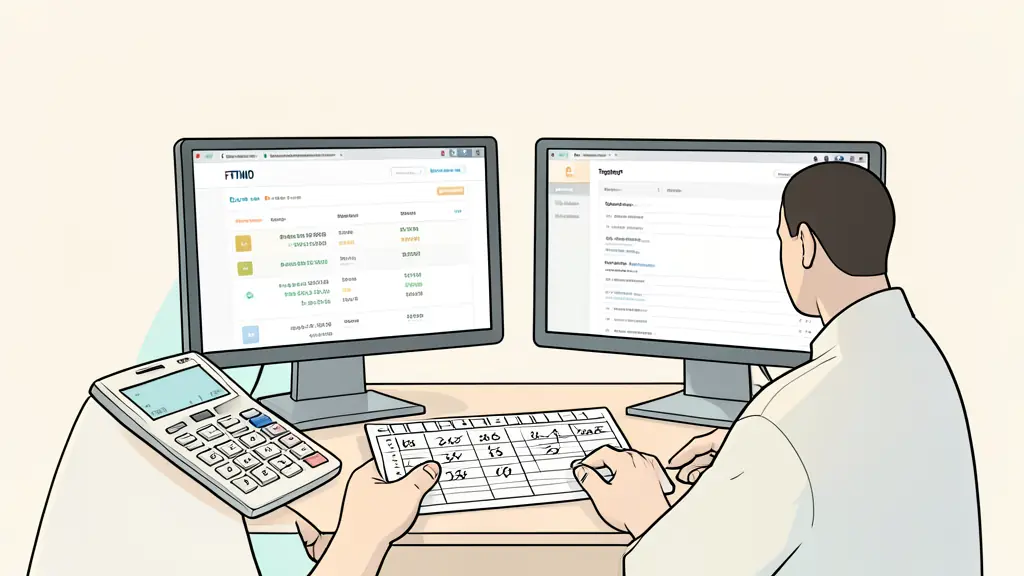
Which charges can make a cheap evaluation expensive?
The displayed evaluation fee is only one component of the funded trading account cost. Check the seven prop firm costs to check before buying, then examine these items:
- Recurring subscriptions billed until you pass or cancel.
- Reset charges after a rule violation or missed target.
- Activation fees due after passing.
- Exchange data, platform, or account-access charges.
- Trading commissions and other transaction costs.
- Currency conversion charges and applicable taxes.
- Refund conditions tied to activation, payout, minimum trading days, or account status.
Promotional discounts should be treated as temporary. Confirm whether renewal, reset, and activation prices remain discounted, and save the terms shown at checkout.

How should you calculate the cost of reaching a first payout?
The relevant cost is the expected amount paid before your first eligible withdrawal, not the nominal account balance.
Consider this illustration, not current provider pricing: a $100 entry fee, one $100 retry, a $150 activation charge, two subscription months at $50 each, and $40 in trading costs produce a total of $490. If a refundable fee is returned only after payout, keep it in your initial cash requirement and subtract it separately afterward. Apply the same treatment to prop firm reset fees.
Illustrative total: $490.00
function calculatePropCost() {
const n = id => Number(document.getElementById(id).value) || 0;
const total = n(‘entry’) + n(‘retry’) * n(‘retries’) + n(‘activation’) + n(‘monthly’) * n(‘months’) + n(‘trading’);
document.getElementById(‘cost-result’).textContent = ‘Estimated amount paid before first payout: $’ + total.toFixed(2);
}
When do resets and recurring subscriptions change the result?
A higher one-time fee can become cheaper than a low monthly price when passing takes longer or requires repeated attempts. Compare three scenarios:
- Immediate pass: entry plus activation and one billing period.
- One failure: entry plus reset or replacement evaluation, activation, and elapsed subscriptions.
- Several months: all monthly charges, resets, activation, data, and trading costs.
The break-even point occurs when cumulative recurring and reset charges exceed the price difference between the offers. For example, if Offer A costs $50 less initially but adds $25 for each extra month, that advantage disappears after two additional months. These figures are illustrative, not provider prices.
The cheapest futures prop firm on day one may therefore cost more by the time you qualify for a payout. Easier-looking targets or drawdown rules also do not guarantee that you will pass.
Is a futures evaluation the lowest-cost option for you?
October 9, 2026 check: a low subscription price alone does not establish the lowest total cost.
A futures subscription model may suit an intraday trader who can complete the evaluation efficiently, respects contract limits, and understands trailing drawdown. Its initial cash requirement can look attractive, but monthly billing, activation, exchange data, resets, and commissions may reduce that advantage.
The comparison of futures prop firm rule sets can help you examine those constraints consistently.
A one-time forex or CFD evaluation may provide more predictable evaluation spending, but it can still carry strict daily-loss limits, overall drawdown rules, trading restrictions, and activation or refund conditions. Neither model is universally better. Match the billing structure to your expected completion time, instruments, schedule, and tested risk plan.
What should you verify before paying for an evaluation?
Complete this checklist using the provider’s current legal and rules pages:
- Identify the contracting legal entity and applicable jurisdiction.
- Save the current terms, pricing, and rule pages.
- Confirm how daily, static, and trailing drawdown are calculated.
- Review prohibited strategies, news restrictions, holding rules, and automation policies.
- Check renewal dates, cancellation steps, and whether unused time is refunded.
- Record every reset, activation, platform, data, and transaction charge.
- Verify fee-refund conditions and when a refund becomes payable.
- Confirm minimum trading days, consistency rules, payout timing, and withdrawal eligibility.
- Test whether support can document ambiguous rules in writing.
Prop firm trading can lead to repeated fee losses. Passing an evaluation or receiving a funded account does not guarantee regular income or lasting profitability. Risk only money you can afford to lose, and consult a qualified financial professional for guidance tailored to your circumstances.
This article does not replace advice from a qualified professional: consult a specialist about your own situation.
FAQ
What is the cheapest type of prop firm account?
Small evaluation accounts usually have the lowest entry price, but subscriptions, activation charges, reset fees, and restrictive drawdown rules can increase their total cost.
Are futures prop firms cheaper than forex prop firms?
They can have lower promotional entry fees, but many use recurring subscriptions and separate activation or data charges. Forex and CFD evaluations often use one-time fees, so compare the full path to a first payout.
Should I choose a prop firm based on the challenge fee?
No. Compare the fee with the drawdown method, profit target, time limits, trading restrictions, payout rules, and all charges likely to apply.
Are prop firm evaluation fees refundable?
Some providers refund an evaluation fee after specific milestones, while others do not. Check the official terms because eligibility, timing, and refund methods vary.
How much should I risk on a prop firm challenge?
There is no universally suitable percentage. Set risk from the permitted drawdown and your tested strategy, and consult a qualified financial professional if you need advice for your circumstances.

Morgana Martel analyse les prop firms, leurs règles et leurs programmes de financement afin d’aider les traders à faire des choix éclairés. Elle partage des comparatifs transparents et des conseils pratiques pour aborder les challenges avec méthode et confiance.
Envie d'aller plus loin ?
Laisse ton email, on te prévient dès qu'un nouvel article sort.