
Best Prop Firm for Futures: 5 Rule Sets Compared
Compare five futures prop firms by drawdown, evaluation cost, payout rules, restrictions, platforms, and suitability for your trading style.

There is no universal best prop firm for futures. The right choice is the provider whose usable drawdown, payout rules, platform support, and restrictions match how you actually trade. Because no current official fee or rule data was supplied for this comparison, the figures below must be checked directly before purchasing an evaluation.
Pas le temps de lire ?
- There is no universal winner: the right firm depends on your drawdown tolerance, trading frequency, platform, and payout priorities.
- Compare Topstep, Apex Trader Funding, Take Profit Trader, My Funded Futures, and TradeDay using the same rules rather than advertised account size.
- Calculate the usable loss buffer in dollars because a large nominal account can provide relatively little room for losses.
- Verify all fees, drawdown mechanics, prohibited practices, and payout conditions in the official rules immediately before purchasing.
- Passing an evaluation or receiving one payout does not guarantee regular income or long-term account retention.
Which futures prop firm is the best match for your trading style?
Verification date: October 8, 2026. Evaluation prices, drawdown calculations, platform access, and payout conditions can change, so verify them in each provider’s current official rules.
Topstep, Apex Trader Funding, Take Profit Trader, My Funded Futures, and TradeDay belong on a shortlist, but naming one futures prop firm as the overall winner without current agreements would be misleading. The best match depends on which constraint is most likely to affect your strategy.
| Provider | Evaluation cost | Usable drawdown | Profit target | Payout conditions | Platforms | Restrictions |
|---|---|---|---|---|---|---|
| Topstep | Verify current price | Calculate from current rules | Verify | Verify eligibility and withdrawal rules | Verify current list | Check loss, sizing, hours, and strategy rules |
| Apex Trader Funding | Verify current price and renewals | Calculate from current rules | Verify | Verify thresholds and consistency terms | Verify current list | Check trailing loss and contract limits |
| Take Profit Trader | Verify current price | Calculate from current rules | Verify | Verify timing, buffer, and fees | Verify current list | Check daily loss and position rules |
| My Funded Futures | Verify current price | Calculate from current rules | Verify | Verify eligibility and withdrawal limits | Verify current list | Check plan-specific restrictions |
| TradeDay | Verify current price | Calculate from current rules | Verify | Verify timing and account conditions | Verify current list | Check hours, sizing, and prohibited conduct |
Use this table as a verification worksheet, not as a historical price list. A low evaluation fee may be a poor bargain if recurring charges, activation costs, restrictive payout conditions, or an intraday trailing threshold conflict with your method.
What are the strengths and limitations of the five providers?
Editorial standard, October 8, 2026: Affiliate relationships must not alter the comparison criteria or the verdict.
Official facts are the terms published in a provider’s current agreement, help center, and pricing pages. The profiles below are editorial decision rules, not claims about terms that were not supplied.
- Topstep: Consider it if its current platform access, loss calculation, and payout process fit your routine. The main compromise to inspect is whether account progression and withdrawal requirements restrict your normal risk plan.
- Apex Trader Funding: It may suit traders comfortable monitoring detailed drawdown and account rules. Confirm how the threshold moves, when it stops moving, and whether consistency or payout provisions materially affect you.
- Take Profit Trader: Review it if straightforward access to a funded futures account is your priority. Check whether buffers, fees, or withdrawal conditions reduce the practical value of that access.
- My Funded Futures: It may be relevant if its available plan structure matches your strategy. Compare plans separately because pricing, loss limits, and payout terms may not be interchangeable.
- TradeDay: Consider it when education, platform compatibility, and clearly defined evaluation rules matter to you. Verify whether trading-hour or position-management requirements fit your schedule.
None should be selected from promotional pricing alone. The decisive issue is the complete rule set that applies to the exact plan you purchase.
How much trading capital can you actually risk?
An advertised account balance is a notional trading balance, not spendable risk capital. If an account is labeled $50,000 but the maximum permitted loss is $2,000, your effective starting risk budget is closer to $2,000 than $50,000.
Consider a hypothetical futures trading challenge with a $50,000 starting balance and a $2,000 trailing threshold:
- At the start, the failure threshold is $48,000.
- Equity reaches a new high of $51,200.
- If the threshold trails dollar for dollar, it rises to $49,200.
- If equity then falls to $50,400, only $1,200 of loss buffer remains.
This is an illustration, not a rule attributed to any provider. Actual outcomes depend on whether the calculation uses balance or equity, updates intraday or at the end of the day, includes unrealized gains, and eventually stops trailing. Two accounts displaying the same nominal balance and maximum drawdown can therefore provide very different usable risk.
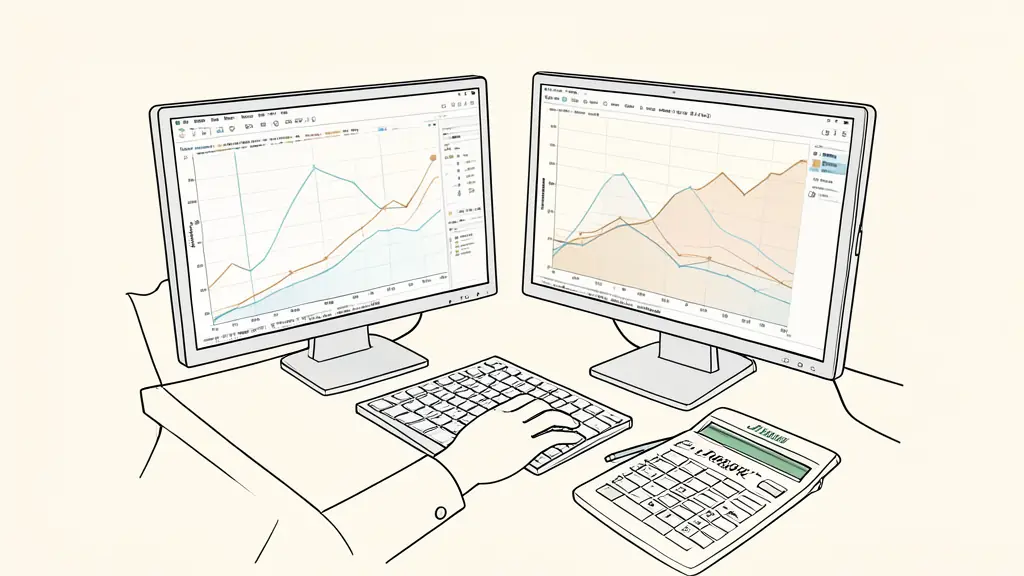
Which challenge rules can invalidate an otherwise profitable strategy?
A positive backtest does not prove that a strategy is compatible with an evaluation. Model every restriction in simulation, including trailing drawdown rules, before paying a fee.
- Daily loss limits can end the account before the broader maximum-loss threshold is reached.
- Contract caps can prevent normal scaling or make partial exits harder to execute.
- Trading-hour rules may require positions to be closed before a specified cutoff.
- News restrictions can prohibit entries, exits, or open positions around scheduled releases.
- Consistency requirements can limit how much one profitable day contributes toward eligibility.
- Prohibited-strategy clauses may cover certain automation, copying, latency practices, or account coordination.
- Forced closures can turn an otherwise manageable position into a rule violation or realized loss.
Size each trade from the smallest applicable limit, not from the advertised balance. Your plan should also survive several consecutive losses without approaching a daily or total threshold.
How should you verify payouts, reliability, and total cost?
Verification note, October 8, 2026: Payment reliability and regulatory status remain uncertain unless supported by current, attributable documentation.
Do not treat anonymous screenshots or testimonials as proof of futures prop firm payouts. They may omit denied requests, account breaches, processing delays, or changing eligibility rules.
Before purchasing:
- Read the provider’s dated agreement and save the version applicable to your plan.
- Record evaluation fees, recurring subscriptions, resets, activation charges, data fees, and withdrawal costs.
- Check the minimum trading days, profit buffers, consistency tests, payout frequency, withdrawal caps, and permitted methods.
- Identify the contracting legal entity, jurisdiction, contact information, and dispute procedure.
- Review documented rule changes and determine whether they apply to existing accounts.
- Consult the CFTC’s customer-protection resources for warnings and guidance.
- Search NFA BASIC for relevant registration and disciplinary information.
Presence or absence in a regulatory database should be interpreted carefully because a simulated funding program may not have the same status as a futures broker. If the legal structure, regulation, or payment record cannot be verified, label it uncertain rather than assuming either safety or misconduct.
What should you check before purchasing an evaluation?
Use this decision flow before selecting a funded futures account:
- Set a maximum fee budget that includes possible renewals, resets, activation, and data charges.
- Calculate usable drawdown under realistic intraday and end-of-day scenarios.
- Confirm that your platform, market-data connection, instruments, and order types are supported.
- Review loss limits, contract caps, trading hours, news policies, consistency terms, and prohibited strategies.
- Simulate the complete plan, including losing streaks and forced closing times.
- Confirm payout eligibility and calculate the cost of reaching the first permitted withdrawal.
- Save dated copies of the pricing page, agreement, and applicable rules.
- Recheck those documents immediately before paying.
Funded trading does not guarantee income, regular withdrawals, or durable success. Evaluation fees and trading losses can affect your finances. Consult a licensed financial professional for advice appropriate to your circumstances.
This article does not replace advice from a qualified professional: consult a specialist about your own situation.
FAQ
What is the best futures prop firm for beginners?
The best choice is generally the firm whose drawdown calculation, permitted trading hours, platform, and payout rules you can explain before trading. A simpler rule set may be more valuable than a larger advertised account.
How much does a futures prop firm challenge cost?
Costs vary by provider, account size, subscription structure, resets, activation fees, and promotions. Check the current official pricing page and calculate the total cost of multiple attempts rather than relying on the initial fee alone.
What is the difference between static and trailing drawdown?
A static drawdown normally remains tied to a fixed threshold, while a trailing drawdown can rise as the account reaches new equity or balance highs. The exact calculation and the point at which trailing stops are firm-specific.
Are futures prop firm payouts guaranteed?
No. Payout eligibility depends on the firm’s current rules, account status, trading conduct, and any consistency or minimum-day requirements. Trading performance and future payments are never guaranteed.
Are futures prop firms regulated like brokers?
Not necessarily. The legal and regulatory position depends on the provider’s business model and services. Review its disclosures and agreements, then check relevant entities through NFA BASIC and other official databases.

Morgana Martel analyse les prop firms, leurs règles et leurs programmes de financement afin d’aider les traders à faire des choix éclairés. Elle partage des comparatifs transparents et des conseils pratiques pour aborder les challenges avec méthode et confiance.
Envie d'aller plus loin ?
Laisse ton email, on te prévient dès qu'un nouvel article sort.