
Cheap Prop Firm: 7 Costs to Check Before You Buy
A low entry fee can hide resets, tight drawdowns, and payout limits. Use seven cost checks before buying a prop firm challenge.

A low purchase fee does not make a prop firm inexpensive. Compare the full cost of qualifying, the usable loss allowance, and the rules that could force you to restart before paying for any evaluation.
Pas le temps de lire ?
- The lowest evaluation fee does not necessarily produce the lowest total cost.
- Compare seven items: entry fee, taxes or conversion charges, resets, subscriptions, activation, platform or data charges, and withdrawal conditions.
- Translate the drawdown into dollars to identify how much capital you can actually lose.
- Exact prices and rules can change, so verify every figure on the firm’s official website on the day you purchase.
- A funded account does not guarantee approval, withdrawals, regular income, or lasting profitability.
What does cheap actually mean for a funded account?
A cheap prop firm has a low expected total cost relative to the loss allowance you can actually use. Calculate that cost as the initial fee, taxes, conversion charges, resets, subscriptions, activation, platform expenses, and withdrawal costs. Then divide it by the maximum permitted loss. The cheapest prop firm cannot be identified without checking live prices for your chosen account size. Set your total evaluation budget first, including failed attempts.
Which seven costs should you compare before paying?
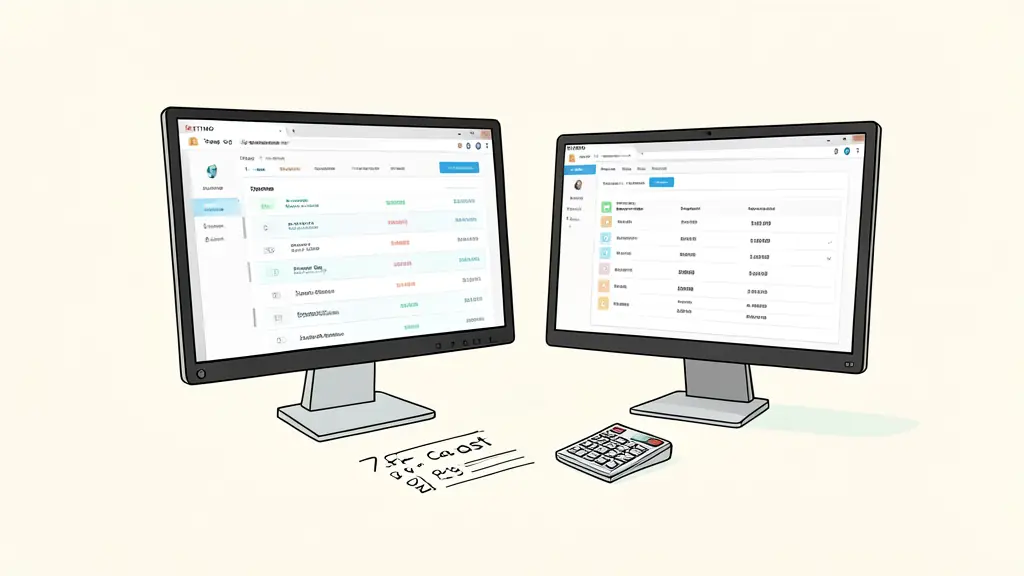
Prop firm challenge fees are only the first cost. FTMO and Topstep cannot be treated as interchangeable offers because account structures and markets may differ. No live pricing data were supplied for this review, so declaring either firm cheaper would be unsupported.
Pricing review status, October 8, 2026: current FTMO and Topstep figures must be verified on their respective official pricing pages before purchase.
| Cost | What to record | FTMO | Topstep |
|---|---|---|---|
| Initial evaluation | Price for the selected account | Verify live price | Verify live price |
| Tax and conversion | Tax plus card or FX charges | Depends on checkout | Depends on checkout |
| Reset | Fee and number allowed | Verify current policy | Verify current policy |
| Subscription | Monthly charge and billing stop date | Verify current policy | Verify current policy |
| Activation | Charge after passing | Verify current policy | Verify current policy |
| Platform and data | Software, exchange data, add-ons | Verify selected setup | Verify selected setup |
| Withdrawal | Fees, thresholds, delays, eligibility | Verify payout terms | Verify payout terms |
Use this calculator after copying the current figures from the official pages:
function calculatePropCost() {
const n = id => Number(document.getElementById(id).value) || 0;
const total = n(‘fee’) + n(‘tax’) + n(‘reset’) * n(‘resetCount’) +
n(‘sub’) * n(‘months’) + n(‘activation’) + n(‘platform’) + n(‘withdrawal’);
const allowance = n(‘allowance’);
const ratio = allowance > 0 ? (total / allowance * 100).toFixed(2) + ‘%’ : ‘enter an allowance’;
document.getElementById(‘costResult’).textContent =
‘Expected total cost: $’ + total.toFixed(2) +
‘. Cost as a share of usable loss allowance: ‘ + ratio + ‘.’;
}
How do drawdown rules change the value of a low fee?
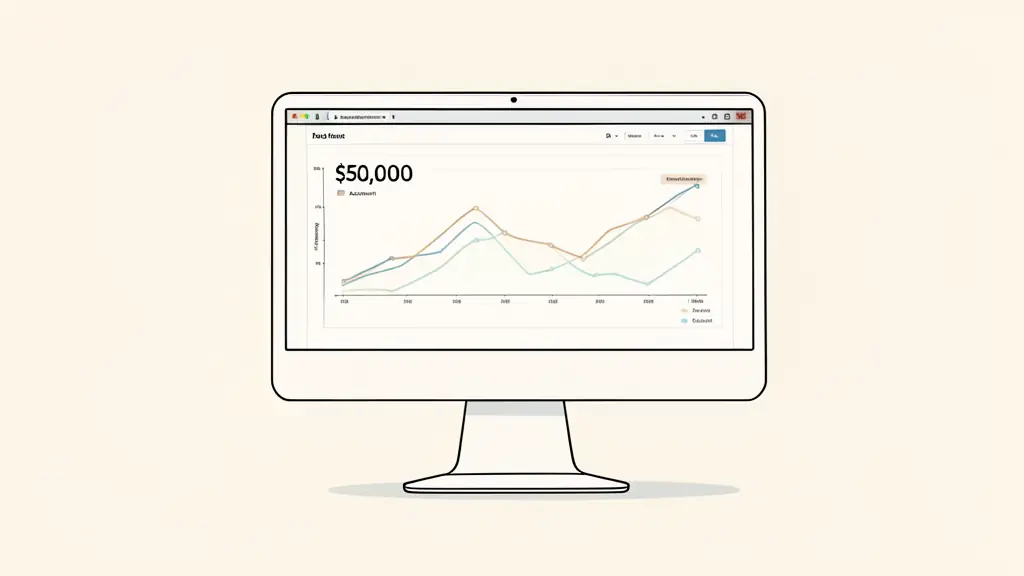
$50,000 of displayed capital does not mean that $50,000 can be lost, illustration reviewed October 8, 2026.
On a $50,000 account, the usable risk is the distance between current equity and the applicable loss threshold. A static limit remains anchored to its stated reference level. A daily limit restricts losses within a defined trading day. A trailing limit can rise as the account reaches new highs.
These prop firm drawdown rules must be checked on dated official rule pages because firms may calculate limits from balance, equity, closed trades, or unrealized profit and loss. An open losing position can therefore reduce the remaining buffer even before it is closed. Compare fees only after calculating that buffer under your normal position management.
Which trading restrictions can turn a low price into a poor deal?
Terms review status, October 8, 2026: restrictions require confirmation in the current official rules for the selected program.
Restrictions increase funded trading account costs when they force you to abandon a tested method or repeatedly buy new attempts. Check:
- Whether positions may remain open during major news.
- Whether overnight and weekend holding is permitted.
- How consistency requirements affect large winning days.
- Whether minimum trading days or completion deadlines apply.
- Which strategies, order patterns, automation tools, or account-copying practices are prohibited.
- Whether your platform and required instruments are available.
A low-priced program is poor value if your work schedule or strategy makes compliance unlikely.
How can you verify reliability and payout conditions?
Reliability review dated October 8, 2026: testimonials document individual claims, not future payment certainty.
Start with evidence published by the firm, then separate it from user reports. Examine:
- The contracting legal entity, address, and working contact details.
- The contract governing evaluation and funded stages.
- The payment schedule, withdrawal methods, and processing conditions.
- Profit eligibility, minimum thresholds, consistency tests, and prohibited conduct.
- Dated notices explaining material policy changes.
- The complete prop firm payout rules, including reasons a payment may be reduced or denied.
User reports can reveal recurring issues, but they do not replace contractual evidence. If a company makes a US regulatory status claim, verify the relevant entity through NFA BASIC rather than relying on marketing language.
Which low-cost offer fits your trading plan?
Score each item from 0 for incompatible to 2 for fully compatible. Reject an offer with any critical zero, even if it appears to be the cheapest prop firm.
- Instruments and platform match your tested setup.
- Trading hours fit your schedule.
- Restrictions permit your strategy.
- Drawdown supports your planned risk per trade.
- Total expected cost stays within your preset budget.
Test the rules on demo, then reread the official terms immediately before payment. Funded trading remains risky and does not guarantee regular income. Discuss financial, tax, or legal questions with a qualified professional.
This article does not replace advice from a qualified professional: consult a specialist about your own situation.
FAQ
Is the cheapest prop firm the best choice for a beginner?
Not necessarily. A lower fee may come with a smaller loss allowance, stricter trading restrictions, recurring charges, or less favorable withdrawal terms. Compare the complete rules and effective risk budget rather than the advertised price alone.
How do you calculate the real cost of a prop firm challenge?
Add the evaluation fee, applicable taxes and currency conversion, expected reset or retry costs, subscriptions, activation charges, and required platform or market data fees. Keep possible payouts separate because they are uncertain.
Are prop firm challenge fees refundable?
Policies differ by firm and program. Some fees may be reimbursed only after specific milestones, while others remain nonrefundable. Confirm the current condition in the official terms before paying.
How much should you risk per trade during a challenge?
There is no universally safe percentage. Set risk from the account’s daily and total loss limits, your strategy’s tested losing streak, and a safety buffer for slippage and commissions.
How can US traders check a prop firm’s regulatory claims?
Identify the legal entity and products involved, then verify any claimed registration through the relevant regulator, including NFA BASIC when applicable. Registration status and customer protections vary by business model.

Morgana Martel analyse les prop firms, leurs règles et leurs programmes de financement afin d’aider les traders à faire des choix éclairés. Elle partage des comparatifs transparents et des conseils pratiques pour aborder les challenges avec méthode et confiance.
Envie d'aller plus loin ?
Laisse ton email, on te prévient dès qu'un nouvel article sort.